

Have you just invented a technical product, device or process? Of course you want to protect your invention and benefit from it in the long run. If your invention meets all necessary conditions, you can apply for a patent. Today and in the next three blog articles we?ll deal with the application process for a European patent. This is one of the most popular methods to get your invention protected in Europe.
But before we get started with the procedure of application and granting a patent itself, let?s have a look at all existing possibilities to patent a technical product in Europe, and deal with some important definitions.
PCT Application and EP Patent
- PCT application: You can apply for a national patent at first, for example in Germany. On the basis of this national patent you can then file an international patent application according to the patent cooperation treaty (PCT). The protection in Europe derives from this international application. The biggest advantage of this method is that you can easily access extensive international protection for your invention. You also gain a lot of time to ultimately decide in which countries you want your innovation to be patent-protected.
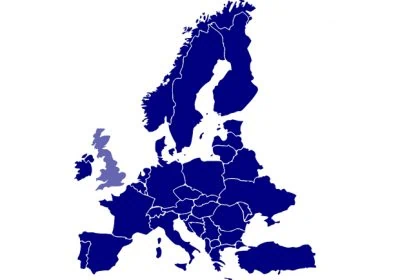
- EP patent: If protection in the European states has a special priority for you, you can apply directly for an EP patent at the European Patent Office (EPO). One big advantage of this method is that it not only applies for states who are members of the European Union, but for all states who have signed the European Patent Convention (EPÜ). This means, for example, that you can get your invention patent-protected in Turkey although this country is not a member of the EU.
As you can already imagine, the application for a patent in Europe can get really complicated. In this how-to guide we especially cover all steps of method 2, i.e. of how to apply for an EP patent directly at the EPO.
Now let?s outline some important definitions and the most relevant aspects of the EP patent.
What Exactly Is a “European Patent”?
The term ?EP patent? or ?European patent? can easily be mixed up with similar terms. Make sure to not confuse the European patent, also referred to as EP patent (which is the topic of this guide), with the so-called ?Europäisches Einheitspatent?, to which we?ll refer as the EU patent. The latter (EU patent) is a method to standardize applying for patents in Europe and shall be valid from 2016. The EP patent, on the other hand, is a method currently valid and widely used. The EP patent will still be in effect parallel to the EU patent.
- The application for an EP patent is submitted directly at the EPO, who will check your application and, at best, grant your patent. It is only after it has been validated by all included EPÜ members and after you have paid all national fees, that the patent protection for your invention is really active in every single state.
- The EU patent is also submitted at and checked by the EPO. But the difference is that with this method no national validations and additional national fees will be required to make the patent protection come into effect. After you have paid all fees required by the EPO and after they have granted your patent, patent protection will be active all over Europe.
- The application for an EU patent shall be more cost-effective than the current method of applying for an EP patent. Unfortunately, the EU patent will only provide patent protection in EU member states. This means, that in those countries who have signed the EPÜ, but are not members of the EU, additional national patent applications have to be filed. So until today it is not clear whether the EU patent will really be more cost-effective than the current EP patent.
In our guide we’ll cover the process of applying for an EP patent. Here’s an overview of all included steps we’ll cover in the three following blog articles:
- Before applying: Heading in the right direction and doing your research
- Filing the application
- Examination on filing and formalities examination
- Research done by the EPO
- Publication of the application
- Substantive examination
- Granting your patent
- Validation
- After the patent has been granted: objection and limitation
- What to do in case your patent application is rejected
Wrap-Up
Here are the most importatant conclusions of what we’ve learnt today:
- At the moment there are two different methods to apply for a patent in Europe: The application using the PCT or the application for a EP patent
- EP patents are granted for members of the European Patent Convention (EPÜ). They don’t necessarily have to be EU members, too
- EP patents can be easily confused with EU patents
- EU patents shall come into effect in 2016. EP patents will be valid further on
In part 2 of the guide we’ll deal with steps 1 and 2, i.e. with some important things you have to do before actually applying and with filing the application itself.
Need someone helping you with your EU-Patent Application?
Then please do not hesitate to contact one of our attorneys. Request a callback TODAY – it’s without any obligations! We would love to hear from you!






Leave a Reply